

Most people think of exhaustion as a simple math problem: you did not get enough sleep, or you did not eat the right foods. But that is not the full story. You can reach the end of your day feeling completely drained, even if you haven’t done anything physically demanding. That is one reason the relationship between your nervous system and your daily energy levels has become such an important area of focus for anyone looking to restore their vitality.
At any given moment, your body requires energy to function. You can live for weeks without food, and days without water, but you cannot survive more than a few minutes without your breath. It is the most fundamental requirement for life. Yet, when we feel constantly running on empty, we rarely look at how we are breathing.
This is why the role of the breath during times of stress has become such an important conversation. Chronic fatigue is often a sign that your nervous system is under more strain than it can handle. When this happens, your breathing automatically changes, often becoming much shallower than your body actually needs. More people are asking how to regulate their system, what causes that constant feeling of overwhelm, and what steps may help restore energy in a meaningful way.
The good news is that we have access to a built-in “biological reset.” It takes less than a minute to feel the difference, and understanding how to use it may play an important role in helping your body genuinely recover.

What Does Your Breath Have to Do With Stress?
One of the nervous system’s most important jobs is to protect you. When you experience stress, your body prepares for action. Part of this response involves changing how you breathe. You naturally shift into short, shallow breaths in your upper chest. This is helpful if you are in immediate physical danger, but it becomes a problem when you are simply reading a stressful email or sitting in traffic.
We often think that our emotions control our breath—which they do. When you are angry or anxious, your breathing becomes rapid and shallow. When you are relaxed, you naturally take long, slow, deep breaths. But what many people do not realize is that the relationship works both ways. Your breath also controls your emotions. By intentionally changing the way you breathe, you can send direct safety signals to your brain, letting it know that it is okay to calm down.
A helpful way to define stress is simply having too much to do, not enough time, and not enough energy. While you cannot always change your to-do list, add more hours to the day, or immediately reduce your daily toxic load, you can directly influence your energy levels. And your breath is the fastest way to access and regulate that energy.
How Your Body Naturally Restores Energy Through Breathing
One of the most fascinating things about the respiratory system is that it is both automatic and entirely within your control. You do not have to think about breathing to stay alive, but when you do think about it, you can use it as a tool to shift your biology.
The Mechanics of Belly Breathing
A key part of proper breathing involves expanding the diaphragm. Because of chronic stress and sitting at desks all day, many of us have unlearned how to breathe properly. We tend to breathe only into the upper chambers of our lungs. To actually bring more oxygen into the body and trigger a calming response, you need to breathe deep into the belly.
When you breathe properly, your stomach should expand outward. This simple mechanical shift allows air to travel all the way down into the lowest parts of your lungs, maximizing oxygen exchange and signaling your nervous system that you are safe. For a deeper understanding of this biological necessity, James Nestor’s groundbreaking book, Breath: The New Science of a Lost Art, is highly recommended.

The Vagus Nerve Connection
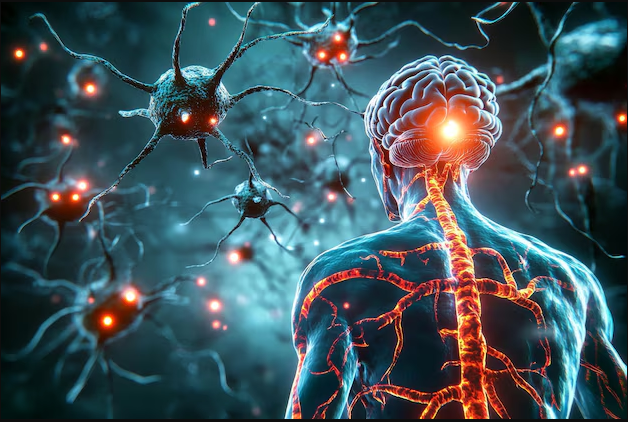
But proper breathing does more than just deliver oxygen. When you breathe fully, deeply, and slowly through the nose, it directly activates your vagus nerve. This is a major nerve that runs from your brain to your abdomen, and it is responsible for controlling your body’s “rest and digest” system.
Research shows that slow, deep breathing shifts the autonomic nervous system away from fight-or-flight and into a state of repair. This is part of why understanding your breath has become so important in modern wellness.
Together, these breathing practices help the body:
- Activate the vagus nerve to calm the mind
- Shift the autonomic nervous system out of stress mode
- Support the body’s natural energy balance
- Create the internal conditions required to genuinely recover
That is part of how the body naturally restores its vitality, and why simple breathing techniques can matter so much for your overall health.
The Ancient Science of Pranayama
While modern science is now explaining the mechanics of the vagus nerve, these concepts are not new. One of the most effective ways to begin addressing nervous system strain is through an ancient practice called Pranayama.
Controlling the Life Force
In this tradition, “Prana” represents your body’s life force energy, and “Yama” refers to controlling or directing it. By practicing Pranayama, you are literally directing the energy within your body. Everything is energy—our cells, our thoughts, and our physical forms. When you balance this energy through the breath, you often feel more invigorated, clear-headed, and resilient.
Practices like Sudarshan Kriya (SKY breath) have been extensively studied for their ability to support the treatment of stress and anxiety. These cyclic breathing techniques provide a powerful, natural way to hit the reset button on your biology.
A Simple Box Breathing Practice You Can Do Right Now
You do not need to attend a long yoga class to experience the benefits of breathwork. If you are feeling overwhelmed, or preparing for a stressful event, you can use a technique called “Box Breathing” to calm your system in just a few minutes. Here is how it works:
Sit up straight and place your hand on your stomach. You will breathe in a pattern of four:
- Breathe in through your nose for a count of 4, feeling your belly expand.
- Hold your breath for a count of 4.
- Breathe out slowly for a count of 4.
- Hold empty for a count of 4.
Repeat this cycle a few times. Let your breath return to normal, and notice how your shoulders relax and your mind clears. It is a simple tool, and once you learn it, you can use it anywhere, whenever life feels a bit “too much”.
Supporting Your Nervous System Is About More Than One Thing
Restoring your energy is not about chasing one magic answer. It is about understanding that your vitality is connected to many parts of your daily experience, including how you manage stress and how you breathe. If no amount of rest seems to leave you feeling truly restored, your nervous system may be asking for something different.
That is why whole-body support matters. The respiratory system does not work in isolation, and neither does healing. For many people, incorporating a simple, daily breathing practice is what makes true resilience possible. It helps people feel better equipped, more centered, and more empowered to handle their day.
Conclusion
When you begin to see how your breath influences your biology, a different perspective starts to emerge. One that is rooted in understanding, support, and a greater sense of possibility.
But understanding the mechanics of your breathing is only half the battle. Your physical defenses are directly tethered to your emotional environment. When you are constantly operating in a state of fear, trauma, or chronic stress, your nervous system remains locked in “fight or flight,” draining your energy reserves. True resilience requires deep emotional healing and nervous system regulation.
This is why we help clients get to the root cause of their stress and help their nervous system heal and regulate through the Awaken Process.
Restore Your Energy and Calm Your Mind Today
To help you explore the power of your respiratory system further and escape the cycle of chronic exhaustion, watch this exclusive guided breathing practice.
In this brief, actionable session, you will discover:
- How your breath is designed to recognize and respond to systemic stress every single day.
- Why supporting your body’s natural autonomic defenses through Box Breathing plays a critical role in energy restoration.
- What happens when your breathing becomes shallow and trapped in your chest, and why that matters.
- Practical ways to mechanically activate your vagus nerve and shift out of high-stress mode.
Watch the Free Guided Breathing Practice Now
References
(1) Jerath, R., et al. (2006). Physiology of long pranayamic breathing: Neural respiratory elements may provide a mechanism that explains how slow deep breathing shifts the autonomic nervous system. Medical Hypotheses, 67(3), 566-571.
(2) Sengupta, P. (2012). Health impacts of yoga and pranayama: A state-of-the-art review. International Journal of Preventive Medicine, 3(7), 444-458.
(3) Gerritsen, R. J., & Band, G. P. (2018). Breath of Life: The Respiratory Vagal Stimulation Model of Contemplative Activity. Frontiers in Human Neuroscience, 12, 397.
(4) Brown, R. P., & Gerbarg, P. L. (2005). Sudarshan Kriya cyclic breathing for the treatment of stress, anxiety, and depression. Journal of Alternative and Complementary Medicine, 11(1), 189-201.